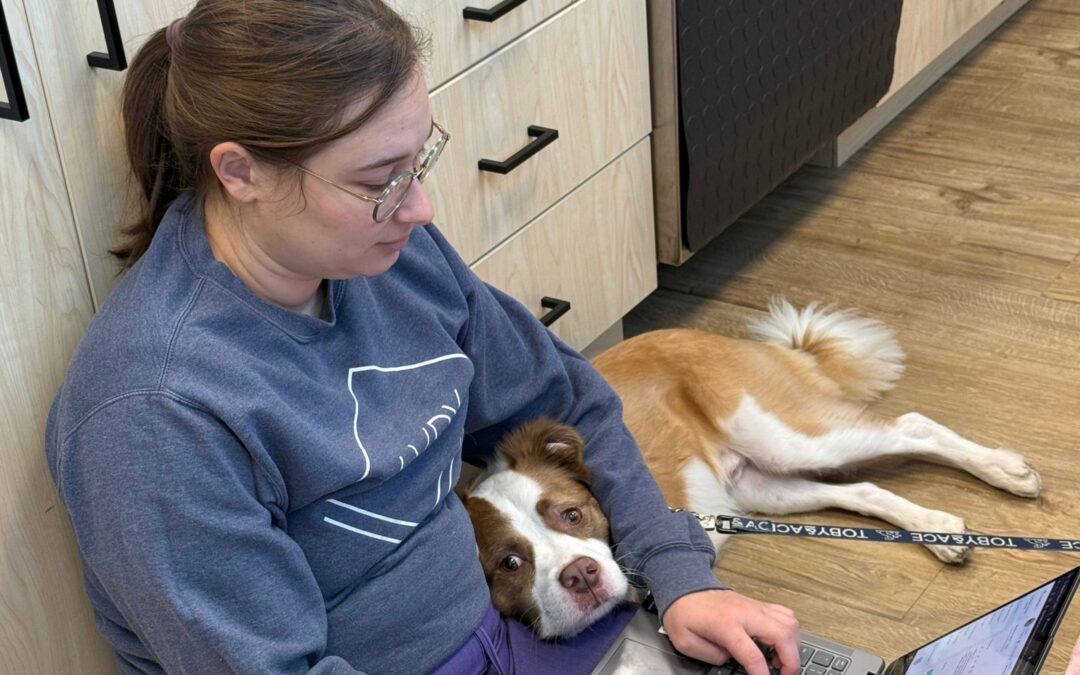
Every so often, part of my job happens after the exam room. I sit down with a patient’s medical record and write a letter to their pet insurance company explaining why a condition is not pre-existing. Why the ear infection a dog has today has nothing to do with a note from a puppy visit three years ago. Why a cat’s urinary emergency isn’t the same problem as one loose stool at eight weeks old.
I don’t write these letters every day, mostly because so few pets are insured to begin with. Only about 4% of U.S. pets have coverage, roughly 6% of dogs and just 2% of cats, according to the North American Pet Health Insurance Association. It feels like we see these numbers climb month to month.
From “can you afford it?” to “let’s get it covered”
Without insurance, the care conversation still too often starts with cost. We recommend the bloodwork, the X-rays, the surgery we know a pet needs, and then we work with our clients to do mental math. Sometimes the right plan gets trimmed down to the plan that fits the budget. That’s hard on pet owners, and honestly, it’s hard on us too.
Insurance changes the conversation. When a pet is covered, clients get reimbursed for the care they know their pet needs. Reimbursement can take a few days to a week, so we still have to consider the initial out-of-pocket expense. What I’m noticing is that I’m having slightly fewer conversations about the cost of care and many more about the best diagnostic plan based solely on the pet’s needs. And can I say, this is my favorite thing to do in my job: solving problems and relieving suffering as quickly as possible.
There is a tense feeling after my team presents a treatment plan to an owner when money is the deciding factor and the plan is out of reach. I’m accustomed to creating staged diagnostic plans (breaking testing up over time to avoid one big bill, and spreading it out over multiple paychecks). These can be in the pet’s best interest, since many tests at once can be overwhelming for them and we can’t explain why the tests have to be done. However, delaying diagnostics that I know are critical often leads to incorrect diagnoses due to insufficient information, delayed treatment, and, worst of all, prolonged suffering for the pet, which takes a huge toll on caretakers and on us as providers.
Having a few more pets each day get the immediate testing and care they need provides palpable relief for pet owners and for our staff, who just want to see the patient well again.
The challenge in veterinary medicine, compared to human medicine, is that almost all insurance plans only work if coverage is in place before your pet needs it.
How pet insurance actually works
Most pet insurance in the U.S. is reimbursement-based:
- Your pet is seen, and you pay the clinic in full.
- You submit a claim with the invoice and medical records.
- The insurer reviews the records, applies your deductible and reimbursement rate, and pays you back, sometimes the same day you submit your claim, more often 1-7 days later.
Quick definitions:
- Deductible: what you pay before coverage kicks in, usually per year.
- Reimbursement rate: the share of the covered bill you get back, commonly 70%, 80%, or 90%.
- Annual limit: the most the policy pays in a year. Some plans are unlimited.
- Waiting period: the gap between enrolling and coverage starting. Often a few days for accidents, a couple of weeks for illness, and sometimes months for orthopedic conditions.
- Plan type: Accident-only covers injuries. Accident & illness covers injuries plus disease, and it’s what I recommend for most pets. Wellness add-ons help budget for vaccines and routine care, but they’re a different product from true insurance. More recently, dental coverage for periodontal disease (which is otherwise always considered pre-existing in pets) can be purchased for very young pets.
The big one: pre-existing conditions
Nearly every pet insurance policy excludes pre-existing conditions. What surprises owners is how broadly insurers define them.
To an insurer, “pre-existing” usually doesn’t mean diagnosed before you enrolled. It often means any sign or symptom documented in your pet’s medical record before coverage started, or during the waiting period, even if no one ever put a name to it. Insurers request your pet’s full history, and they read every line.
Here’s what that can look like (illustrative examples, not specific patients):
- A puppy exam notes mild redness in one ear. Two years later, the dog develops chronic ear disease, and the insurer flags it as pre-existing.
- A kitten has a day of diarrhea after a food change. Years later, she’s diagnosed with inflammatory bowel disease, and the insurer tries to connect the two.
- A dog limps for an afternoon after the dog park. Later, he tears a cruciate ligament. Many policies also have a bilateral clause, meaning a problem in one knee can exclude the other knee too.
- A young male cat strains in the litter box once. Years later, a urinary blockage is denied as related.
This is where my letters come in. Often the medical facts simply don’t support the link the insurer drew. A self-limiting bout of diet-change diarrhea in a kitten is not the same disease as IBD in an adult cat. A day of soreness that fully resolved is not a torn ligament. I describe my clinical reasoning, draw on my experience with how disease processes work in pets, and ask them to reconsider. Sometimes they do, and other times the policy language doesn’t leave room. Either way, it’s much easier to never be in that position.
One more nuance worth knowing: some insurers will eventually cover a “curable” condition, like an ear or urinary infection, once your pet has been symptom-free for a set period. Incurable conditions like diabetes, allergies, or hip dysplasia are usually excluded for life once they’re documented. A small but growing number of plans will cover pre-existing conditions after one year of continuous coverage, which can be great for non-urgent conditions you need help affording.
The takeaway: the best time to enroll is before your pet’s first vet visit, or as close to it as you can get. A clean medical record is the most valuable thing you can bring to an insurer.
When should you enroll?
- Puppies and kittens: as soon as they’re eligible (most insurers start around 8 weeks), ideally before or right at the first exam.
- Newly adopted adults: right away. Shelter and rescue records count as medical history too.
- Seniors: still worth considering. Anything already documented won’t be covered, but new problems will be, and senior pets tend to have more of them. Expect higher premiums.
- Already insured and thinking of switching? Talk to us first. A new insurer will treat everything in your pet’s existing record as pre-existing, so switching can quietly cost you coverage you already have.
What to look for in a policy
Before you sign, check:
- Annual limit and whether limits are per incident, annual, or lifetime: a plan that covers about $2,000 of care per year is likely very affordable, but you shouldn’t rely on it for much. A knee surgery for a torn ligament in a dog now costs $6,000-8,000.
- How the policy defines pre-existing, whether it ever covers curable conditions, and whether there’s a bilateral condition clause. Also check whether dental illness is covered or only dental accidents, since every pet has periodontal disease as a pre-existing condition.
- Waiting periods, especially for orthopedic conditions
- Coverage for exam fees (some plans exclude them, and specialist exam fees are often $200-300), hereditary, congenital, and behavioral conditions, prescription diets, and rehab (what we call physical therapy for pets)
- How premiums change as your pet ages
- How fast claims are paid, and whether the insurer can pay the clinic directly
How we help you choose: Pawlicy Advisor
Comparing all of that across a dozen companies is a lot. That’s why we point our clients to Pawlicy Advisor, which lets you compare plans from multiple insurers side by side based on your pet’s species, breed, age, and zip code. It’s a good way to see real prices and real policy differences in one place before you commit.
Our part: thorough records, sent fast
Insurers make decisions based on your pet’s medical record, so the record matters. We document accurately and completely at every visit. That’s our medical and legal obligation, and it also works in your favor: clear, specific notes make it much easier to show when two problems aren’t related. Our records are digital and well organized, so when you need them for enrollment or a claim, we can get them to you or your insurer quickly.
Pet insurance, set up early, is one of the most reliable ways to keep the focus on what your pet needs, not what you can afford today. And if your insurer ever gets it wrong, we’ll be in your corner.
Have questions about insurance, or a new puppy or kitten to get started? Book a visit at our South Philly or Northern Liberties location.