
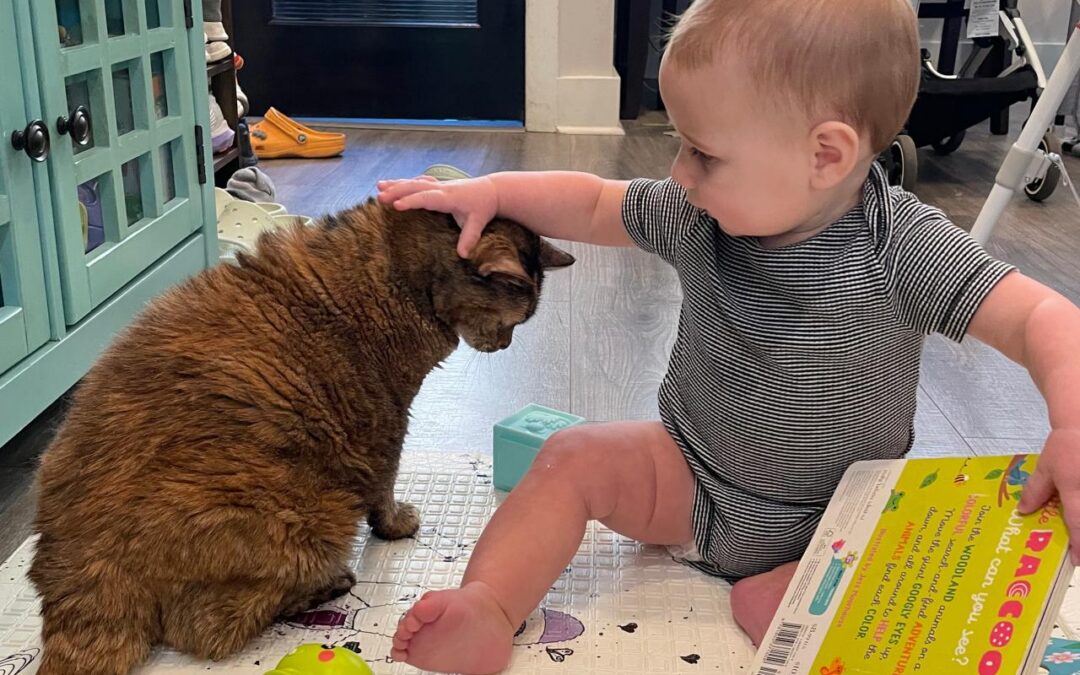
I’ve got a toddler at home and a due date a few weeks out, which means I’m spending this fall on both sides of a conversation I have with clients constantly: the vet giving the advice, and the parent who actually has to follow it.
People ask me some version of this question all the time once they’re visibly pregnant. What do I actually need to do. Most of what’s out there online is either too vague to act on or clearly written by someone who’s never juggled a toddler and a due date at the same time. So here’s what I actually tell families, dog and cat households both, plus the medical piece worth knowing if you’ve got a cat, because that question comes up in almost every one of these conversations too.
Schedule a Visit at Love City Vet
Start Months Before You Think You Need To
The families who struggle are almost always the ones who start the week the baby’s born. Your dog doesn’t know a due date. They know that one day, everything about the house changed at once, and that sudden shift is what causes problems, not the baby itself.
- Bring the nursery gear in early. The crib, the swing, the changing table, whatever’s going in that room, set it up weeks ahead so it’s just furniture by the time the baby’s home, not something new and alarming.
- Start shifting attention gradually, not all at once. If your dog’s used to being walked the second you wake up, start pushing that back now. A sudden drop in attention the week the baby arrives reads very differently than a change that’s already been normal for a month.
- Get them used to the sounds. Baby crying recordings, played quietly at first during a meal or a walk, work well. Family Paws’ Dogs & Storks program is the one I actually recommend to clients. It’s built specifically around this transition and covers a lot more ground than I can fit in one post.
- Reinforce a solid settle or place command. You want a spot your dog will go to and stay on cue, calmly, without needing you to hover over them the whole time. That matters a lot more once your hands are full.
The Day You Bring the Baby Home
- Send a blanket or hat home first if you can. Something with the baby’s scent on it, ahead of the actual homecoming. It sounds small. It genuinely helps.
- Greet your dog on your own before the introduction. They’ve missed you, probably more than usual with the disrupted schedule. Let that reunion happen first so they’re not meeting someone new while also anxious about you.
- Keep the actual introduction low-key. Let your dog approach at their own pace rather than holding the baby out toward them. A leash is fine for a big or anxious dog, mostly for your own peace of mind.
- Reward calm. Treats, praise, whatever your dog responds to, the moment they’re relaxed near the baby. You’re building the association you want them to carry forward.
Rules I Don’t Bend On
- Never unsupervised, not even for a few seconds, not even with a dog you’d trust with your life
- Give your pet somewhere to retreat to that’s genuinely off-limits to the baby: a crate, a gated room, a high perch for a cat
- Learn to read stress before it becomes a problem. Lip licking, yawning out of context, stiffening, turning their head away. That’s a request for space, not defiance
- Keep food, bowls, and small toys out of crawling reach once your baby’s mobile
If you’re seeing real anxiety, resource guarding, or anything that worries you, don’t wait it out. ASPCA’s guide on dogs and babies is a good starting reference, and a trainer or a visit with us can catch a lot before it turns into a real problem.
Schedule your dog’s appointment today
The Cat Question Everyone’s Afraid to Ask
I get this one from almost every pregnant cat owner, usually in a slightly apologetic tone: do I have to get rid of my cat. No. You don’t. The risk is real but manageable, and rehoming a cat over it is almost never necessary.
The concern is toxoplasmosis, a parasite that can be shed in cat feces and, in rare cases, cause serious harm to a developing baby if a pregnant person is newly infected. Here’s what actually reduces the risk, according to the CDC:
- Have someone else scoop the litter box if at all possible. This is genuinely the easiest fix.
- If you have to do it yourself, wear gloves and wash your hands well afterward. Every time.
- Scoop daily. The parasite doesn’t become infectious in the litter until one to five days after it’s passed, so a clean box daily meaningfully cuts your exposure.
- Keep your cat indoors and on commercial food. Indoor cats who aren’t hunting have a much lower infection rate to begin with.
An indoor cat eating regular cat food poses very little risk. This is genuinely one of the more overblown fears I hear in the exam room, and I’d rather you know the actual precautions than feel pressured into giving up a pet you love over a manageable risk.
Frequently Asked Questions
How do I introduce my dog to my newborn?
Let your dog greet you first, calmly, before meeting the baby. Bring a blanket with the baby’s scent home ahead of time if you can, then keep the actual introduction low-key and let your dog approach at their own pace. Reward calm behavior the moment you see it.
Do I need to get rid of my cat if I’m pregnant?
No. The toxoplasmosis risk from an indoor cat eating commercial food is low, and it drops further if you scoop the litter box daily, wear gloves, and wash your hands. Rehoming a cat over pregnancy is rarely necessary.
When should I start preparing my dog for a new baby?
As early as possible, ideally months before the due date. Gradual changes to routine, sound exposure, and nursery setup all work better when they’re spread out rather than crammed into the last few weeks.
What is toxoplasmosis and how do cats spread it?
Toxoplasmosis is an infection caused by a parasite that can be present in cat feces. It becomes infectious one to five days after being passed, which is why scooping the litter box daily significantly lowers the risk of exposure.
Is it safe to leave my dog alone with my baby?
No, never unsupervised, even briefly and even with a dog you trust completely. Supervision is the single biggest factor in preventing bites and other incidents between pets and infants.
What are signs my dog is stressed around the new baby?
Lip licking, yawning when nothing is tiring them, stiffening up, or turning their head away are all early signs of stress. These are requests for space, and responding to them early prevents bigger problems later.
Should I use a baby doll to prepare my dog before the baby arrives?
Yes, it can help. Carrying a wrapped doll around the house gets your dog used to seeing you holding something baby-sized, and practicing commands like a settle or place while holding it builds habits you’ll actually need later.
Ready to Talk It Through?
If you’re expecting and want a game plan specific to your pet, that’s exactly the kind of visit we like having. The AAP’s guidance on bringing baby home is worth a read too, it covers the pet side alongside everything else you’re prepping for. Our exam pricing is published if you want to know what to expect before you book.
Schedule Your Visit
Dr. Killian Lenahen, VMD, sees patients at both Love City Vet locations. She’s a mother of a toddler and expecting her second baby in September.